A history of the Aeronca,
Bellanca, American Champion Family of Aircraft
By Tom Beamer
Page 1
- Aeronca Beginnings
Page 2
- Aeronca/Champion/Bellanca-Champion/American
Champion Models
Page 3 - Early
Aircraft Designations
Page 4
- The Citabria Era Designations
Page 5
- The 8 Series
Page 6
- And…..
Page 7
- Structure (Fuselage and Wings)
·
7AC, Champion, the base airframe, 35‘ wing span, no flaps,
13.1 gallon fuselage tank between the instrument panel and firewall, 65 hp
Continental.
S7AC, seaplane 7AC
7ACA, Champion, 60 hp two-cylinder Franklin,
produced briefly in the early 1970’s during the Bellanca-Champion
period. The Franklin engine was built in Poland after the company (originally
in Syracuse NY) was purchased by Petzel after
bankruptcy.
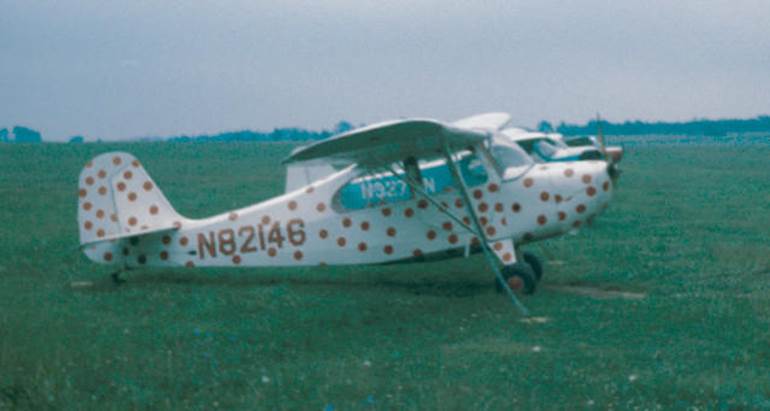
Aeronca 7AC
·
7BCM, Champion, 85 hp Continental, military L-16A
with greenhouse glass
·
7CCM, Champion, base airframe with additional of
dorsal fin and one 5.5 gallon wing tank in addition to fuselage tank, fuel
injected 90 hp Continental, military L-16B with greenhouse glass.
S7CCM,
civilian seaplane
·
7DC, Champion, 85 hp civilian version of 7CCM
without greenhouse glass, also built in a Farm
Wagon version with wood lined cargo bin.
S7DC,
seaplane
· 7EC, Traveler, Traveler Deluxe, 90 hp,
electric system (earlier models may have had wind driven generators installed),
early 7EC’s had fuselage tank/wing tank, later aircraft had two wing tanks and
no fuselage tank. This was much like current configuration but
there are a number of different tank quantity/vent/feed line configurations
used throughout the entire 7 series, and there are significant differences
within the Citabria series from model-to-model, year-to-year.
7EC, the Champ, current production,
100 hp, single wing tank, LSA compliant, this is essentially a non-aerobatic,
lighter weight, version of the 7ECA with a rounded tail.
S7EC,
seaplane
·
7FC, Tri-Traveler, 7EC with tricycle landing gear
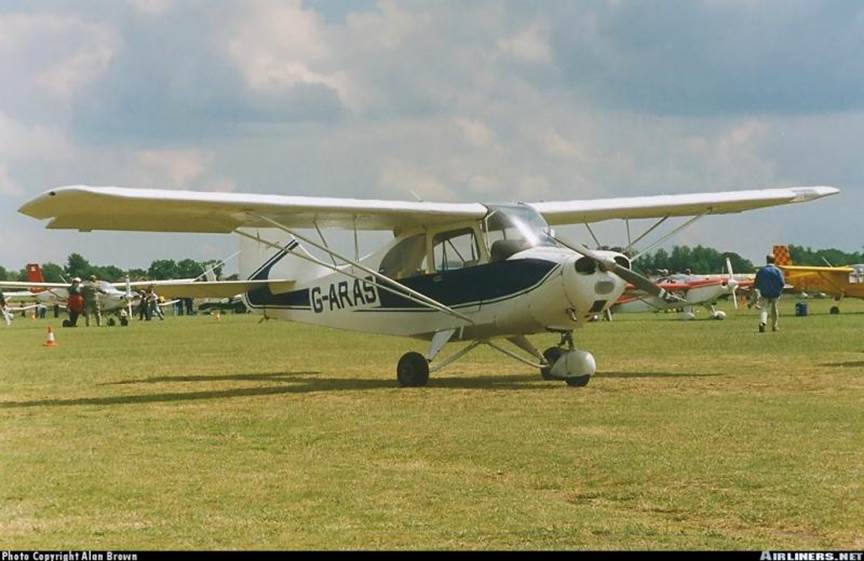
Aeronca 7FC Tri-Traveler
· 7GC, Sky-Trac, 140 hp (the first production use of a
Lycoming in a 7 series), similar to 7EC with structural changes for larger
engine and higher gross weight. Contrary to some published accounts this was
not certified as a three place aircraft.
7GCA, 150 hp, the “A” denoted the original design
intent that was to target the agricultural (crop dusting) market.
7GCB, Challenger, 150 hp, 7GCA fuselage with longer wings and
flaps (first use in the 7 series), also aimed at the agricultural market, the
first model approved for aerobatics.
7GCBA, 150 hp, a Restricted Category 7GCB for ag
use.
Note that while the 7GCBA was certified in the Restricted
Category many of the 7 series aircraft, going all the way back to the 7AC,
would be operated in the Restricted Category as dusters or sprayers. Some ag
conversions used a small hopper that simply replaced the rear seat, some were
delivered (or modified) with a larger tank in the rear seat area and no rear
windows, and some with an external belly tank, all would have been in the
Restricted Category when configured for ag use.
Often an aircraft would have two Airworthiness Certificates, Normal and
Restricted, and use the one appropriate for the current configuration, ag one
day, remove the spray tank and boom and fly charter the next. Difficult to
believe with the current proliferation of jet charter but there was a time when
7AC’s flew charter, I’ve done it personally.
·
7HC, DX’er, 140 hp, similar to 7GC except tri-cycle gear, two
place rear seat and a control wheel in front (no rear seat controls), this is
the only three place 7 or 8 series aircraft, must have been cozy with two men
in the rear seat. At least 40 built.
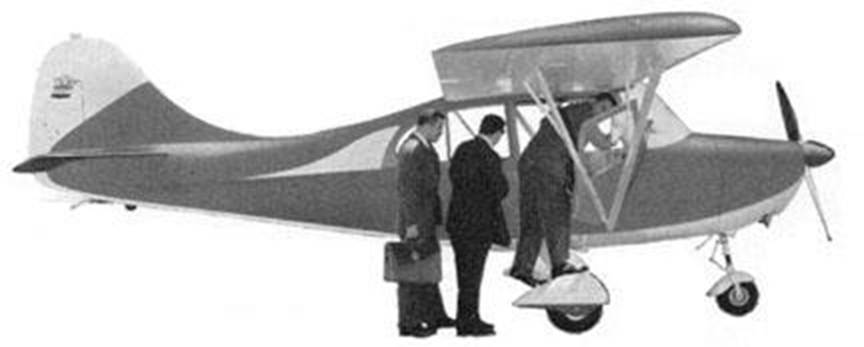
Aeronca 7HC, DX’er
For historic perspective we must remember that Cessna was
now producing modern all metal, tri-cycle geared 172’s and 150’s, Piper was
building fabric covered Tri-Pacers and Colts. Champion was attempting to make
an older design modern with the tri-cycle geared 7FC and 7HC, likewise the
front seat control wheel in the 7HC was an effort to be more modern, and add
utility with a two place rear seat in the 7HC.
·
7JC, Tri-Con for tricycle-conventional gear,
the 7JC had the third wheel under the baggage compartment. Yes it looked very
strange………..many were converted to 7EC. Given the angle I can’t see any
improvement to the existing excellent visibility and suspect ground handling
would have deteriorated given the geometry, but it was one more attempt to make
an elderly design modern. At least 26 built.
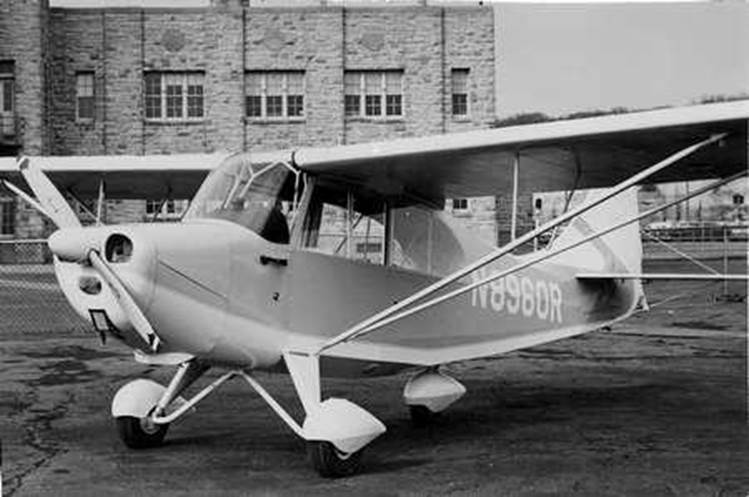
Aeronca 7JC Tri-Con
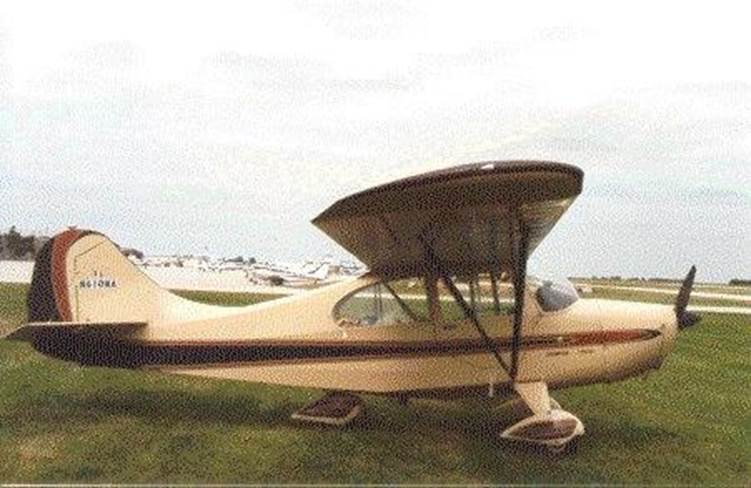
Aeronca 7JC Tri-Con
·
7KC,Olympia, 150 hp, essentially a 7GCA with
reduced wing span and front seat controls only, the first Champion use of a
swept tail, and a port hole window for the rear seat……….four built. I’ve never been
able to confirm the exact span but I suspect this is very close to a current
7GCAA.
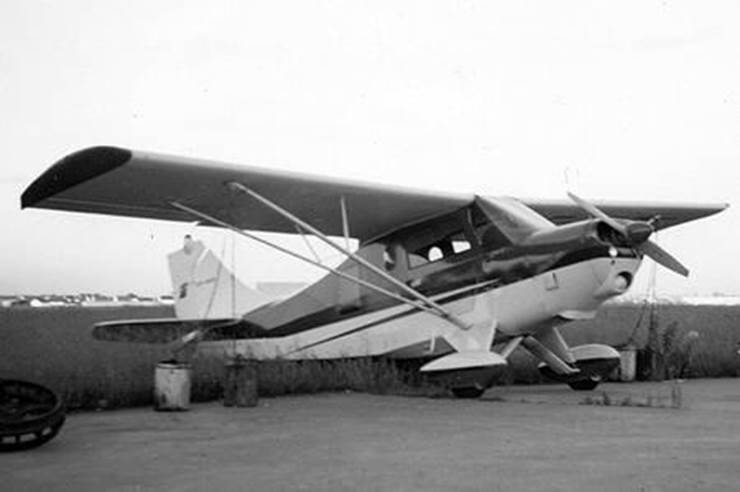
Aeronca 7KC Olympia
Page 1
- Aeronca Beginnings
Page 2
- Aeronca/Champion/Bellanca-Champion/American
Champion Models
Page 3 - Early
Aircraft Designations
Page 4
- The Citabria Era Designations
Page 5
- The 8 Series
Page 6
- And…..
Page 7
- Structure (Fuselage and Wings)
Home